
Fish is an indisputable pillar of healthy eating—it is rich in omega-3 fatty acids, high-quality protein, iodine, vitamin D, and calcium. What's more, regular consumption benefits the heart, brain, and immune system.
But how do you choose the right form so that your body gets the most out of it and you don't waste time? Let's find out!
1. Fresh and chilled fish: Taste quality, preparation difficulty
Fresh fish, whether raw or chilled, is the most nutritious. It offers unbeatable flavor, juiciness, and a full spectrum of nutrients—including B vitamins, vitamin C, and antioxidants—in their natural form, without added salt or preservatives.
How can I tell if fish is really fresh?
- Smell: You should only smell a pleasant "fishy" odor, not a musty smell or ammonia.
- Eyes: They must be clear, bulging, and transparent, not cloudy. Cloudy eyes are found in fish that are already beginning to spoil.
- Gills: They should be bright red to pink in color. If they are brown or gray, the fish is losing its quality.
- Surface: Shiny, moist, covered with natural mucus. Dry or dull skin is not acceptable.
- Consistency: The meat is elastic—when pressed with a finger, the indentation immediately disappears. If the indentation remains, the fish is no longer fresh.
- For vacuum-packed products: Check that the packaging is intact, check the expiration date, and make sure there is no unpleasant odor.
Disadvantages: The main disadvantage is its short shelf life – approximately 1 to 2 days. In addition, it must be kept refrigerated at all times, which, together with the complex processing, often increases the price.
Then there is the question of preparation. This is more demanding—the fish must be scaled, deboned, and cleaned before it can be prepared. In addition, some require special preparation that not everyone can handle.
2. Frozen fish: A practical compromise
Although properly shock-frozen fish retain most of their nutritional value, problems can arise with added water. This increases weight and reduces quality.
What to watch out for:
- Polyphosphates (E 452): The information on the packaging indicates added water, which may constitute up to 50% of the product's weight.
- Ice slush in the package: A clear sign of added water. The fish will lose a significant amount of weight after thawing and may be watery.
- A little tip: Look for products labeled "no added water" or "glazed" (a thin layer of ice that protects against drying out).
3. Smoked, salted, and dried fish: In moderation and with caution
- Smoked fish: These are often fattier varieties (salmon or mackerel) that have a higher calorie content. In addition, the smoking process itself can produce undesirable substances, so it is only suitable for occasional consumption.
- Dried fish and salted fish: Be aware of the extremely high salt content, which puts strain on the body. Do not add salt to side dishes and combine them with fresh or cooked vegetables (e.g., beetroot), which help balance the high sodium content.
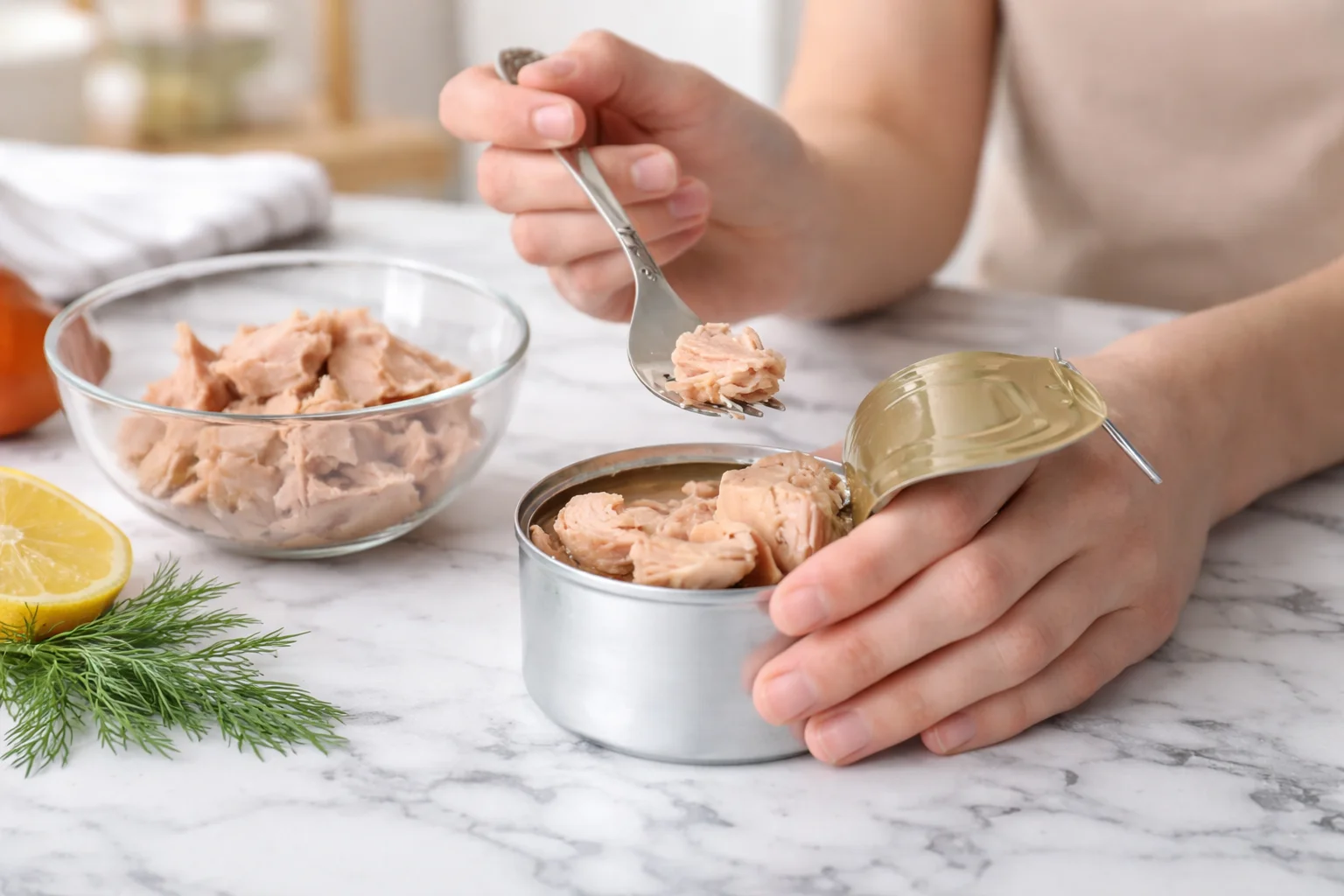
4. Canned fish: An unexpectedly good idea
Canning is a gentle method of processing that does not significantly reduce the nutritional value of meat. Proteins and omega-3 acids remain intact, and thanks to the softened edible bones, it becomes an excellent additional source of calcium.
How to choose the healthiest ones:
- Pay attention to the ingredients: "In its own juice" is better than "in oil." Oil significantly increases the calorie content.
- Read labels: Watch the salt content. Some brands offer reduced-sodium options.
- Look for certifications: The MSC label guarantees that fish come from sustainable and well-managed fisheries.
One of the main advantages of canned food is its long shelf life – months or even years. What's more, it's always "at hand"; just pick up a can at the store and add some bread or a simple side dish, and you've got yourself a tasty snack. This means it's affordable, even when bought in bulk.
5. Pickled fish and salads: Pay attention to the ingredients!
Here, too, fish meat remains a high-quality source of nutrients. However, the additives and side dishes can be a problem:
- Fish salads with mayonnaise – can be a calorie bomb full of fat.
- Salads with "yogurt" – these are not always low in calories, as they often contain mayonnaise and yogurt is only added as a supplement. It is a good idea to check the ingredients.
- Pickles (sour brine ) – some manufacturers use artificial sweeteners or flavor enhancers, which are not particularly healthy and sometimes leave an unnatural aftertaste.
Diversity is key!
There is no single correct answer here. Fish in any form is a good source of nutrients and vitamins, so for a healthy diet, it is advisable to combine all forms according to your needs and, above all, what you feel like eating at the moment.
- Treat yourself to fresh fish when you have the time and desire for a gourmet experience and maximum nutrient intake.
- Freezing is a great way to keep a ready supply of high-quality meat for soups, risottos, or quick roasting.
- Use canned, smoked, and salted foods sparingly as a quick way to enrich your diet with nutrients when you don't have time.
If you pay attention to the ingredients in products and avoid those that are poor quality, too fatty, or overly processed, you definitely won't go wrong. And most importantly, fish is only one part of a healthy diet—don't forget fruit, vegetables, and pasta!
High-quality fish is essential: DiamondFish
For those who want the assurance of top quality and taste, there is DiamondFish catfish. A great fish that the whole family will enjoy! Whether you are preparing a family lunch, a gourmet specialty, or just looking for inspiration for your kitchen, we always offer you the best!
👉 Explore our range in our e-shop and get inspired to prepare the perfect fish feast!
Treat yourself to taste and quality. Treat yourself to DiamondFish!